
Driveway materials compared · Cheshire
Which driveway material is right for your Cheshire home?
Gravel, block paving or natural stone: the finish changes the look, the maintenance and the budget, but it is not the first decision we make. On Cheshire clay, the ground underneath matters more.
A beautiful surface laid over a shallow or poorly compacted base will still sink, spread or hold water. We design the excavation, sub-base, edge restraint, falls and drainage first, then help you choose the material that suits the house and the way you use the drive.
This guide gives realistic 2026 planning ranges for a complete installation — not a teaser rate for spreading a new finish over an unknown base. A free site visit turns the range into a written quote.
The quick answer
Gravel
Choose gravel when value, permeability and a relaxed country-house look matter most.
Block paving
Choose block paving when you want the widest design choice and a surface that can be lifted and repaired locally.
Natural stone or setts
Choose natural stone or setts when the drive needs to feel part of a period or high-character property and the finish justifies the higher labour and material cost.
There is no universal "best". The right answer depends on the levels, drainage, vehicle movements, architectural style and how much maintenance you are willing to do.
Driveway materials compared: 2026 planning prices
These are realistic planning estimates for professionally installed work in Cheshire. They assume proper preparation and are not fixed quotations. Difficult access, deep excavation, contaminated spoil, retaining work, drainage, steps, gates and complex cutting can move a project above the range.
| Surface | 2026 planning range | Best for | Maintenance | Main compromise |
|---|---|---|---|---|
| Gravel | £80–£125/m² | Rural and traditional properties; long drives; permeable schemes | Raking, occasional top-up and weed removal | Loose stone can migrate or rut without good edges and stabilisation |
| Block paving | £110–£170/m² | Flexible design, borders and repairability | Joint maintenance and occasional cleaning | Poor groundwork causes settlement; neglected joints can grow weeds |
| Natural stone or setts | £150–£250+/m² | Period homes and premium, character-led frontages | Cleaning and joint inspection; varies by stone | Highest material and skilled-labour cost |
The lower end generally means a straightforward shape, good machine access and ordinary levels. The upper end allows for fuller excavation, heavier groundwork on clay, more drainage, premium edges or intricate cuts. These figures are intentionally higher than many national "from" prices — CLG's specification normally involves a complete build-up where the existing base cannot be proven: excavation, spoil removal, compacted sub-base, drainage, restraints and the finished surface. Resurfacing a sound existing base can cost less, but it should only be offered after inspection.
For the itemised costs behind a driveway — including genuine trade prices for MOT Type 1, sand, cement, blocks and stone — see our 2026 driveway cost guide.
Gravel driveways
Gravel gives a Cheshire property a softer, less suburban frontage than a continuous hard surface. It suits long approaches, rural plots and traditional homes particularly well. It is also naturally permeable when the complete construction below it is designed to drain.
The low material price can be misleading. A driveway still needs topsoil and weak ground removed, a load-bearing sub-base compacted in layers, a separating membrane where appropriate, and strong edge restraints. Without those parts, gravel spreads into the pavement or lawn, develops wheel ruts and needs constant topping up.
On turning areas or frequently used parking bays, a stabilisation grid can help hold the aggregate. Gravel is less suitable on steep slopes, where it travels downhill under braking and heavy rain, and it is not automatically the easiest surface for wheelchairs, pushchairs or narrow cycle tyres.
Best points
Permeable, cost-effective, easy to refresh, wide choice of colour, and the audible crunch can be useful at an entrance.
Watch-outs
Migration, ruts, loose stone near the highway, awkward access for small wheels, and more routine tidying than a bound surface.
Typical planning range: £80–£125/m² for a complete professional installation, depending on excavation, stone choice, edging, grids, drainage and access.
A real CLG gravel project in Knutsford
For a Knutsford home, we installed a new lawn and gravel driveway as one coordinated project. The driveway received a compacted MOT Type 1 sub-base — typically 100–150mm depending on the ground — a weed-suppressing membrane and edge restraints. The important detail was at the boundary: the driveway fall, lawn level and finished edge were designed together so gravel stayed put and water did not saturate the new turf.
Read the lawn and gravel driveway case study →Block-paved driveways
Block paving is the versatile choice. Colour, pattern, border and laying direction can be adjusted to a modern townhouse, a red-brick family home or a larger traditional frontage. If a service trench or local repair is needed later, individual blocks can be lifted and reinstated rather than cutting through a continuous finish.
That flexibility only lasts when the edges and bedding are right. Vehicle turning puts sideways load into the surface; weak edge restraints let blocks spread, while an inadequate base settles into hollows. Jointing sand also needs occasional attention. The common "block paving always gets weeds" complaint usually describes neglected joints or contamination settling into them, not plants growing up through a correctly built base.
Standard blocks offer the most economical route. Tumbled, clay, textured and permeable systems cost more. Permeable block paving is a complete construction system — not simply standard blocks with wider joints — and the sub-base has to be specified accordingly.
Best points
Broad design choice, crisp borders, proven durability, and straightforward local repair.
Watch-outs
Workmanship is highly visible, joints need maintenance, and cheap installations often save money below ground.
Typical planning range: £110–£170/m², with premium or permeable blocks potentially higher.
Natural-stone and sett driveways
Natural stone is chosen for character rather than lowest cost. Calibrated sandstone, granite and stone setts can connect a driveway to an older Cheshire house in a way a uniform manufactured surface sometimes cannot. Variation is part of the material: each piece has its own tone and texture.
Not every patio slab is suitable for vehicle traffic. Thickness, stone quality, format, surface finish, bedding and jointing all need to match the load. Large pieces also demand accurate full-bed installation so tyres do not create rocking points or cracked corners. On shaded frontages, the porosity and surface texture of a stone affect staining, algae and slip resistance, so samples should be judged as working surfaces rather than just by colour.
Granite setts are exceptionally robust and suit tight curves, entrances and borders, but they involve far more laying and cutting time. Sandstone can give a warmer, more varied finish, provided the product and construction are specified for a drive rather than copied from a patio detail.
Best points
Genuine character, premium appearance, long service life and excellent compatibility with period properties.
Watch-outs
Higher cost, natural variation, more skilled labour, and greater care needed in selecting a driveway-grade stone and surface finish.
Typical planning range: £150–£250+/m². Granite setts, reclaimed material, complex patterns and difficult access can sit above this range.
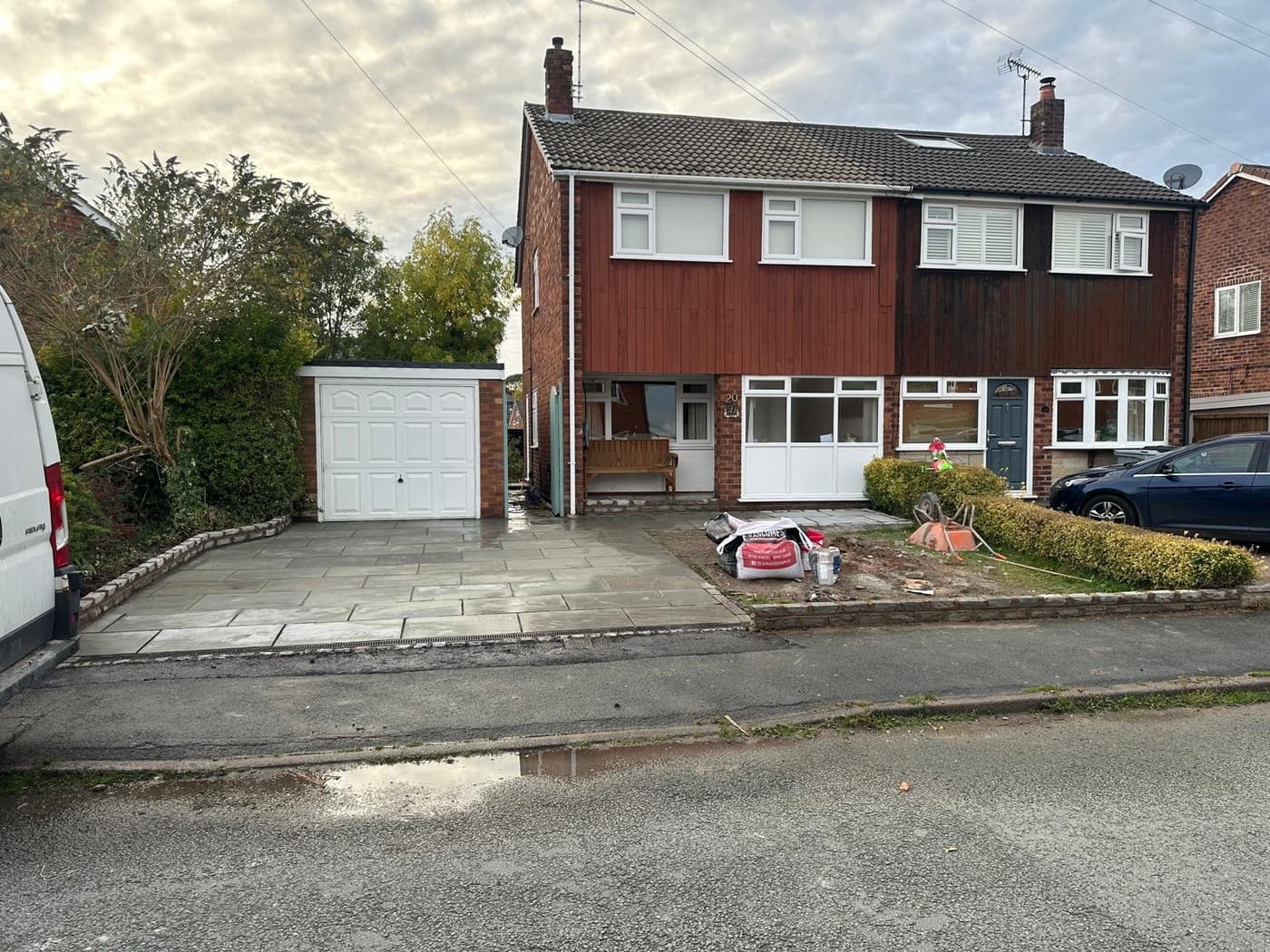
A real CLG Indian-stone driveway in Knutsford
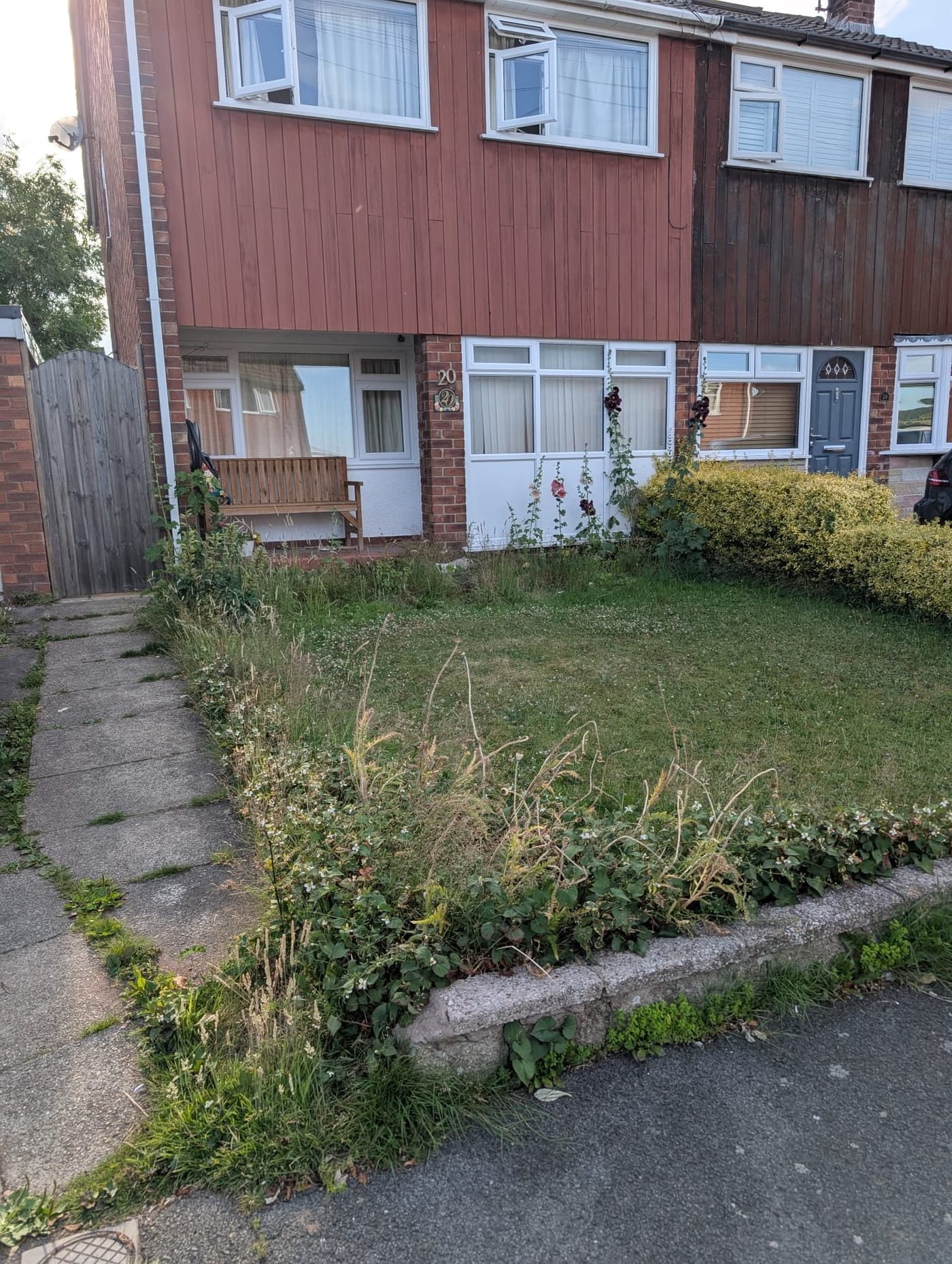
One Knutsford driveway began as cracked concrete, weeds and uneven ground that held puddles. CLG removed the failing surface, levelled and prepared the ground, installed a compacted sub-base, then laid grey 900 × 600mm Indian stone. The driveway was also extended to make the frontage work better for modern parking.
See the Indian-stone driveway transformation →A worked example: a 60m² two-car driveway
For a straightforward 60m² frontage with reasonable access, a complete 2026 planning budget might look like this:
| Option | Planning budget for 60m² |
|---|---|
| Gravel | £5,000–£7,500 |
| Block paving | £7,000–£10,000 |
| Natural stone or setts | £10,000–£16,000+ |
Those are comparison figures, not quotations. A short drive with lots of cutting can cost more per square metre than a large rectangle. Breaking out reinforced concrete, moving more than 20 tonnes of spoil, adding retaining edges, rebuilding steps or routing water to a new drainage feature can add thousands. Good access and a proven, reusable base can reduce the figure.
The quote should make the construction visible: excavation depth, sub-base type and compacted depth, bedding or base course, edge restraints, drainage, waste removal and the precise surface product. If those items are not written down, two prices are not comparing the same driveway.
Cheshire clay, drainage and the 5m² rule
Cheshire clay drains slowly and moves with changes in moisture. That does not make a good driveway impossible, but it makes shallow excavation and hopeful drainage expensive mistakes.
We assess where water comes from, where the finished surface will fall and where it can discharge without sending it towards the house, a neighbour or the public highway. Depending on the site, the solution may involve a permeable construction, channel drains, a suitable infiltration area, or falls towards a lawn or border.
For houses in England, a new or replacement front driveway over 5m² normally needs planning permission if it uses a traditional impermeable surface and does not direct water to a permeable area within the property. Permeable surfacing or on-site drainage can keep work within permitted development, subject to the property's circumstances. Dropped kerbs, listed buildings, conservation controls and major level changes are separate questions, so they should be checked rather than assumed.
Read the official Planning Portal guidance on paving front gardens, or see how CLG handles garden drainage and flood prevention.
Which surface fits which property?
For a modern frontage
A restrained block-paving palette gives a sharp, geometric look and makes future service access easier. A calibrated, sawn natural stone laid in a large-format, minimal-joint pattern can achieve an equally clean, contemporary feel for a modern extension.
For a period Cheshire home
Natural stone, granite setts or a well-chosen tumbled block usually sit more comfortably with older brick and stone. The design should feel related to the building, not like a surface chosen from a sample board in isolation.
For a rural or long driveway
Gravel usually gives the best balance of cost, drainage and character. Stabilisation, edges and turning areas need proper thought; loose aggregate is not ideal on a steep approach.
For the lowest routine maintenance
Block paving and natural stone with sealed, dense joints are usually the easiest to keep visually tidy, ahead of gravel. "Low maintenance" still means cleaning leaves, soil and spillages before they become embedded or feed algae.
For easiest local repairs
Block paving is strongest here. Individual units can be lifted after a service repair or local settlement. Natural setts can also be reinstated, though matching and labour are more involved.
How we build a driveway
-
Site visit and levels
We inspect the existing surface, access, clay, falls, thresholds, highway edge and intended vehicle use.
-
Material and drainage design
We compare suitable finishes in the context of the house and decide how surface water will be managed.
-
Written specification and quote
The proposal sets out the construction, surface, edging, drainage and waste removal — not just a square-metre headline.
-
Excavation and formation
Failed material and unsuitable ground are removed to the depth the site requires.
-
Compacted sub-base and restraints
The load-bearing layers are installed and compacted in stages, with secure edges and drainage formed at the correct levels.
-
Surface installation
Blocks, stone or gravel are installed to the agreed pattern and specification.
-
Finishing and handover
Joints, thresholds and surrounding landscaping are completed and care advice is explained.
See the broader driveway installation service for CLG's construction approach, or browse the landscaping portfolio.
Frequently asked questions
What is the best driveway material for Cheshire clay?
There is no surface that compensates for weak groundwork. Block paving, gravel and natural stone can all perform well when the excavation, compacted sub-base, edges and drainage are designed for the site. The best finish then depends on appearance, maintenance, slope and budget.
How much does a new driveway cost in Cheshire in 2026?
For complete installations, use roughly £80–£125/m² for gravel, £110–£170/m² for block paving and £150–£250+/m² for natural stone or setts as planning estimates. Access, excavation, spoil disposal, drainage, product choice and detailed cutting determine the written price.
Is a gravel driveway suitable for a slope?
Only on a mild slope with the right stone, stabilisation and edge restraint. Loose gravel migrates under braking and heavy rain, so block paving or textured natural stone may be more practical on steeper drives after drainage and grip are assessed.
Do weeds grow through block paving?
Most weeds establish in soil and organic matter that accumulates in the joints rather than growing through a properly constructed driveway from below. Good jointing, secure edges and occasional cleaning reduce the problem. A weed membrane cannot rescue a shallow or unstable base.
Does a permeable surface mean I will not need drainage?
No. Water still needs somewhere safe to go. A permeable block surface over an unsuitable impermeable base is not a permeable driveway system. Clay, high groundwater, nearby foundations and site levels all affect the drainage design.
Do I need planning permission for a new driveway?
For a house in England, a front-garden surface over 5m² generally needs permission if it is impermeable and does not direct runoff to a permeable area within the property. Permeable construction or suitable on-site drainage can fall within permitted development, but listed buildings, conservation controls, dropped kerbs and substantial level changes may need separate consent.
Can you install a new surface over my existing driveway?
Sometimes, but only when the existing base is sound, stable and compatible with the new system. Cracks, movement, poor falls or trapped water should be corrected rather than hidden. CLG will inspect it and say whether reuse is sensible before pricing the job.
Get a written driveway quote.
Free, no-obligation site visits across Cheshire. A written quote, typically within 48 hours. No pressure, no hard sell — just honest advice.
07742 611273