Blog Case study
First impressions of a house are made on the drive up to it, and this Knutsford driveway had stopped making a good one. This Indian stone driveway transformation is what it took to fix that properly.
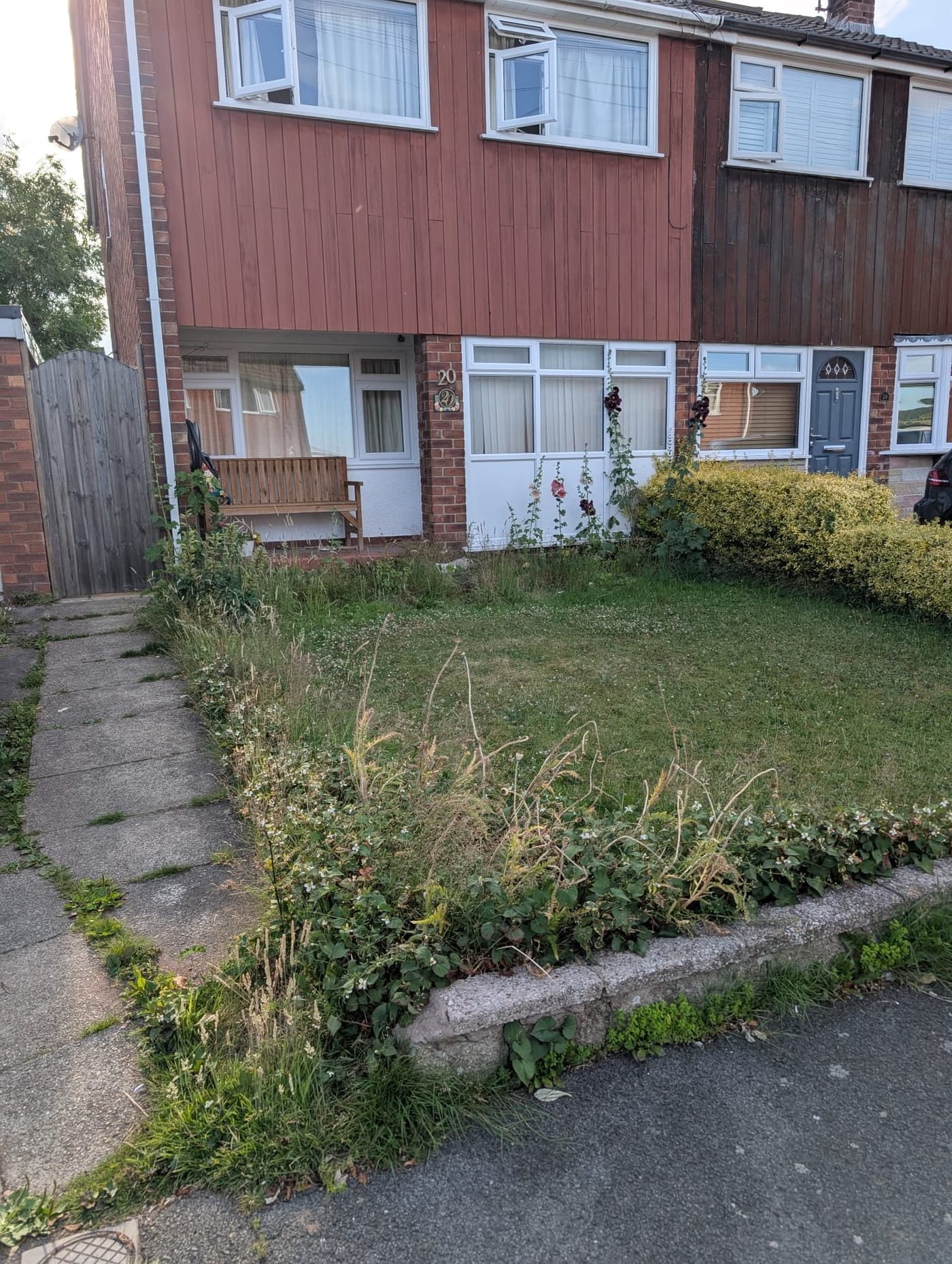
Before: Cracked Concrete and Weeds
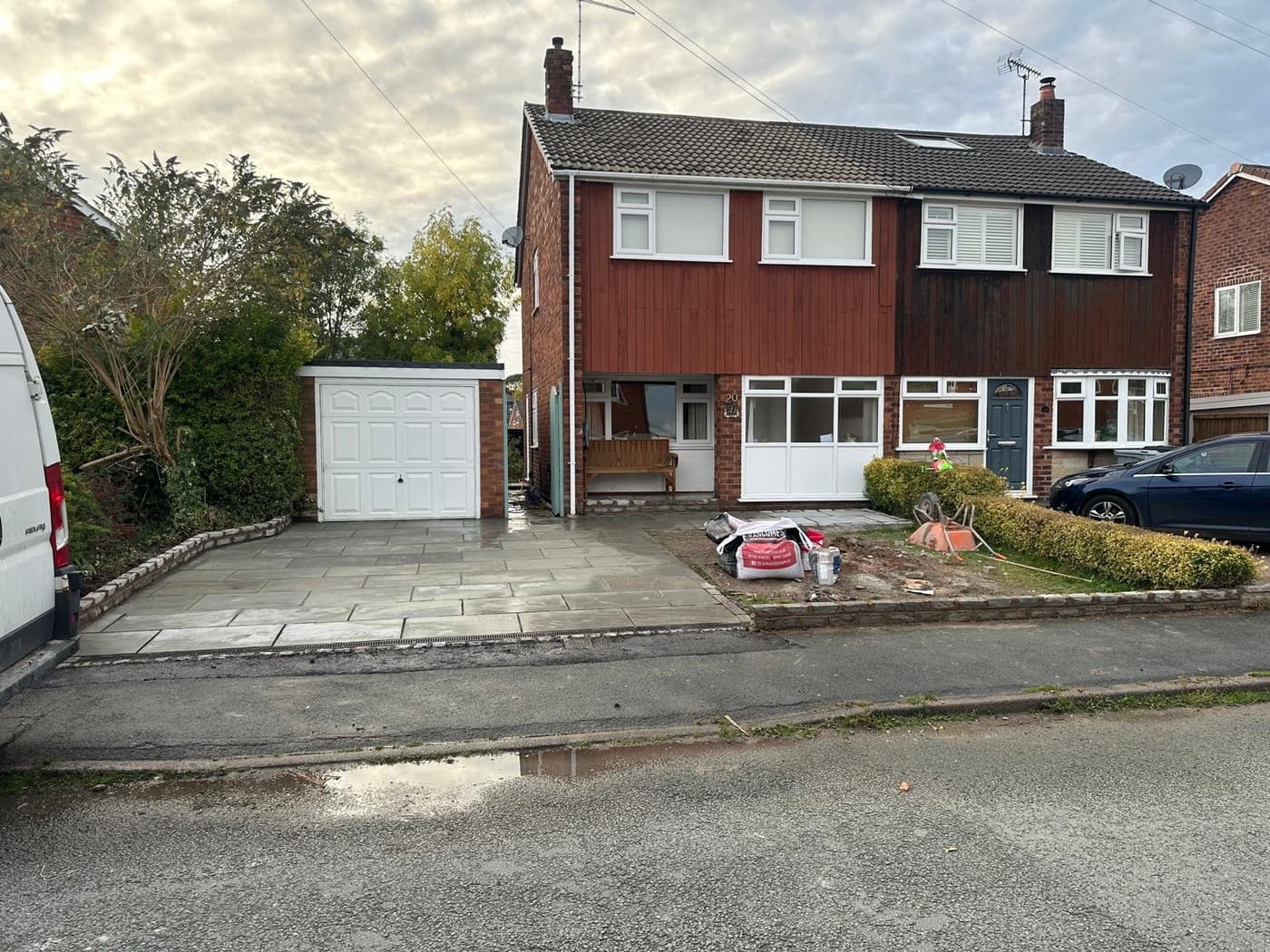
The old driveway was a mess in the specific way tired concrete always is — weeds creeping through every crack, sections of old concrete breaking apart, and patches of bare mud where grass had once been. Every time the homeowners pulled onto their own drive, it was a reminder of a job that needed doing. They wanted something clean, modern and solid, with a layout that made proper sense of the space and would still look sharp in ten years, not just in the first photo.
The Plan
The existing driveway had good bones underneath the mess — reasonable proportions, a sensible relationship to the house — but it was cluttered and uneven. We stripped the design back to the essentials: strong materials, clean geometry, and edges that wouldn’t need constant attention.
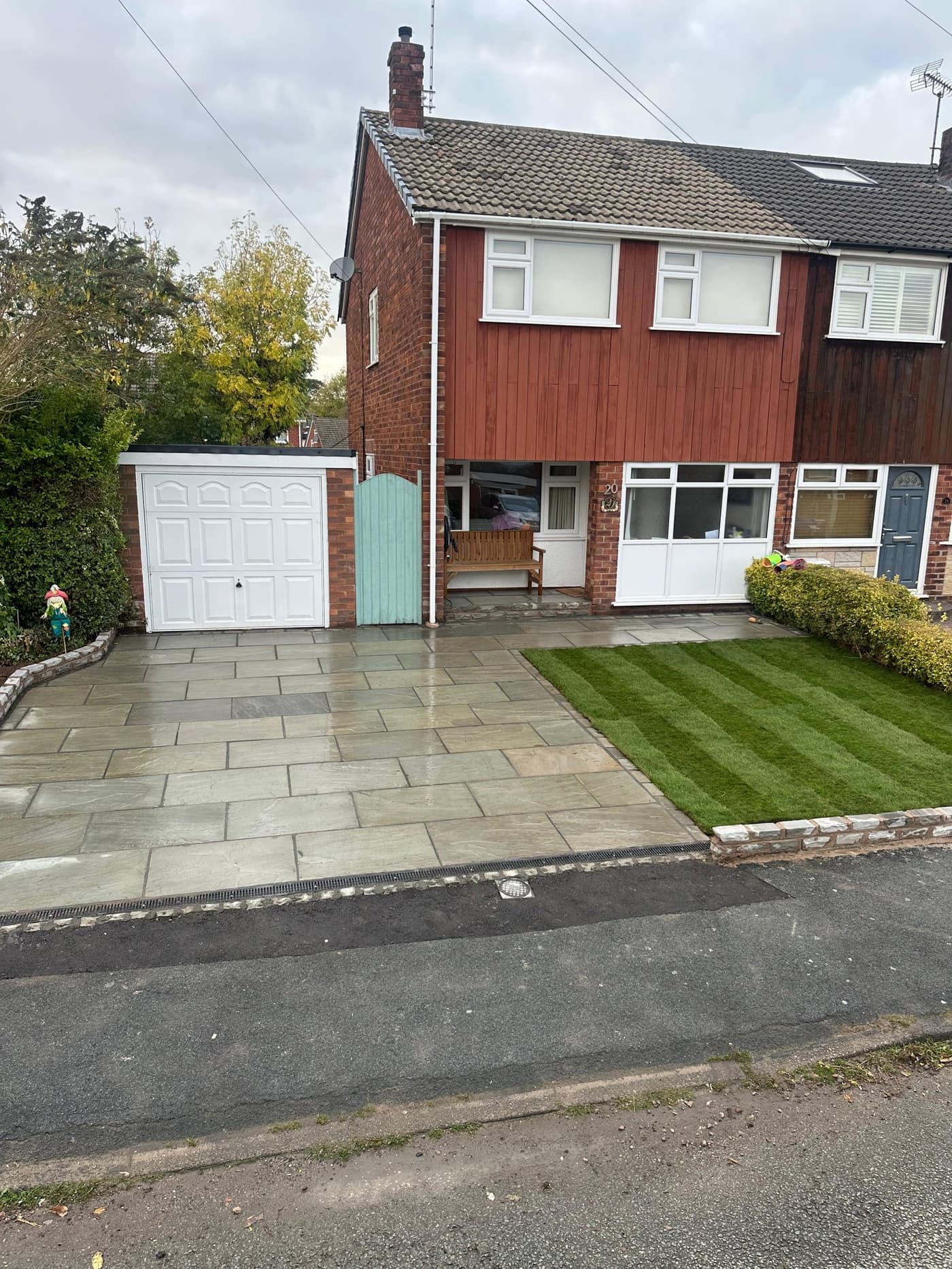
We settled on grey 900 x 600mm Indian stone for the main area. It’s durable and timeless without looking sterile, and the large format keeps joint lines to a minimum, which matters more on a driveway than almost anywhere else — fewer joints means fewer places for weeds to find a foothold.
The Work
We started by ripping out everything holding the space back: the cracked concrete, the weeds, and the uneven, puddle-gathering ground beneath it. Once it was cleared, levelled and properly prepared with a compacted sub-base, the new shape of the driveway began to take form — this is the stage that decides whether a driveway lasts, long before a single decorative slab is laid.
Each Indian stone tile was then laid with precision: clean lines, tight symmetry, every joint crisp. We also extended the driveway slightly, opening the space up and giving the property more room to park and a more balanced frontage overall. It’s a common finding on older Cheshire driveways — the original layout was rarely designed with two cars and modern life in mind.
Why a Compacted Sub-Base Matters More Than the Stone
A driveway carries far more sustained load than a patio ever does — car weight, repeated turning, the occasional delivery van — and none of that is forgiving of a shortcut beneath the surface. The compacted sub-base under the Indian stone is what actually stops slabs rocking, cracking or sinking under that load over the years. It’s a stage nobody photographs and nobody sees once the stone is down, which is exactly why it’s worth asking any contractor directly what depth and material they’re compacting to before assuming a driveway quote and a patio quote are pricing comparable work — the two are not the same specification, whatever the finished surface looks like.
The Result
Pulling up to the house now feels genuinely different. The turf edges are fresh, the stone catches the light properly, and the whole space reads as finished rather than patched. It’s the kind of upgrade that’s obvious from the road, not just up close — no more mess, no more weeds, just a driveway that looks like it belongs on a home people take care of.
Thinking About Transforming Your Own Driveway?
Whether your drive needs a full redesign or simply a clean slate, we handle the process from groundwork through to the finished surface — see our driveway installation page for the full range of materials and what proper preparation involves, or compare natural stone driveway options against gravel and block paving. If you’re in Knutsford or nearby and thinking about your own driveway, get in touch for a free quote.