Blog Case study
Macclesfield sits where the Cheshire plain runs out and the Pennines start, and this Crompton Road project is a good example of the straightforward, ground-up rebuilds we do across the town.
The Vision
Our client on Crompton Road wanted their outdoor space turned from ordinary into something they’d actually want to spend time in — a proper patio, a lawn worth having, and planting that gave the garden some genuine structure rather than a scattering of borders around the edges.
Site Preparation and Demolition
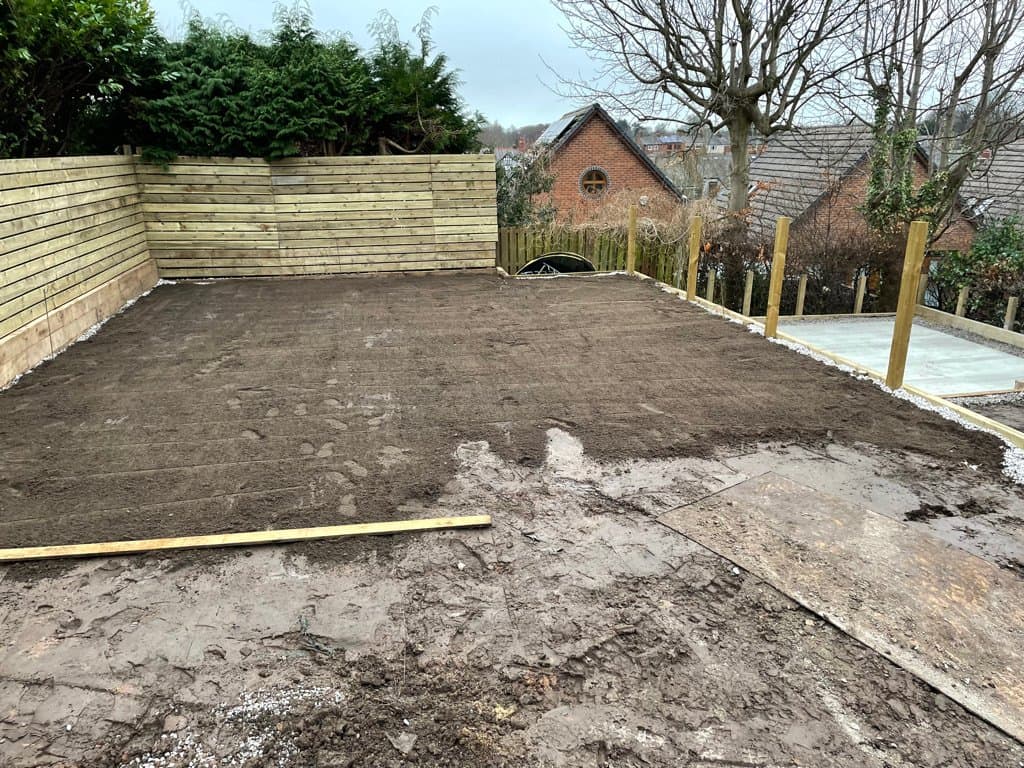
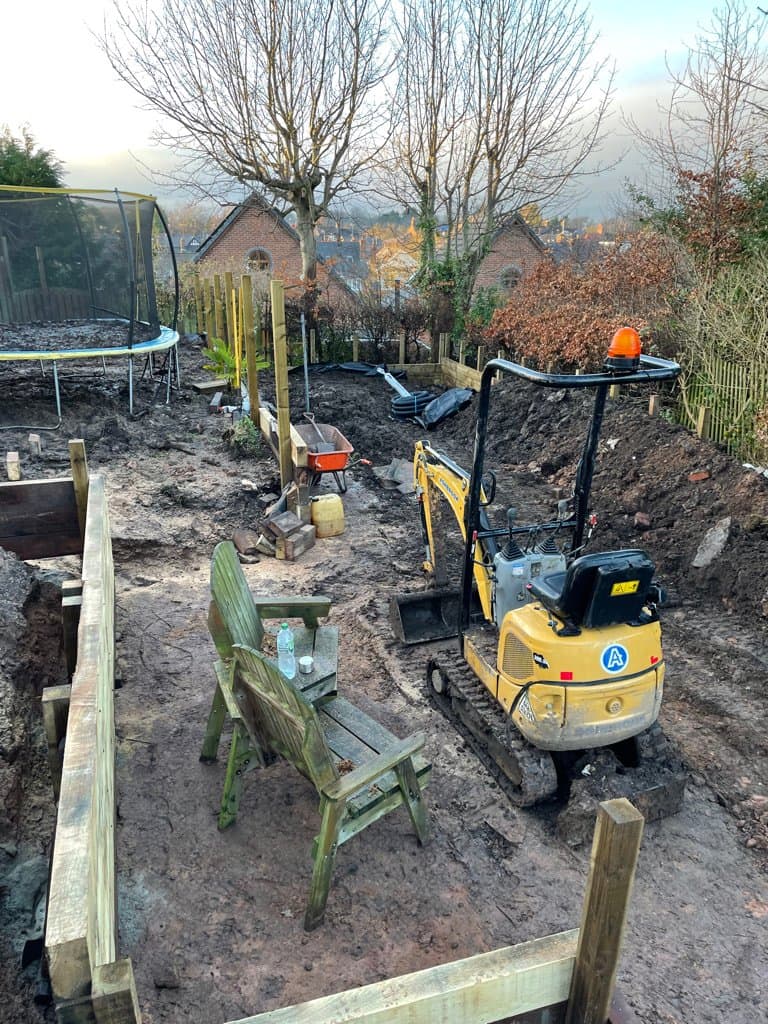
Every landscape transformation starts the same way: clearing what’s there before building what’s next. On Crompton Road that meant removing tired existing surfaces and preparing the ground properly for what was coming — grading, levelling, and dealing with drainage before any new material went down. It’s the unglamorous stage of every project, and the one that decides whether the finished garden lasts.
The Transformation Process
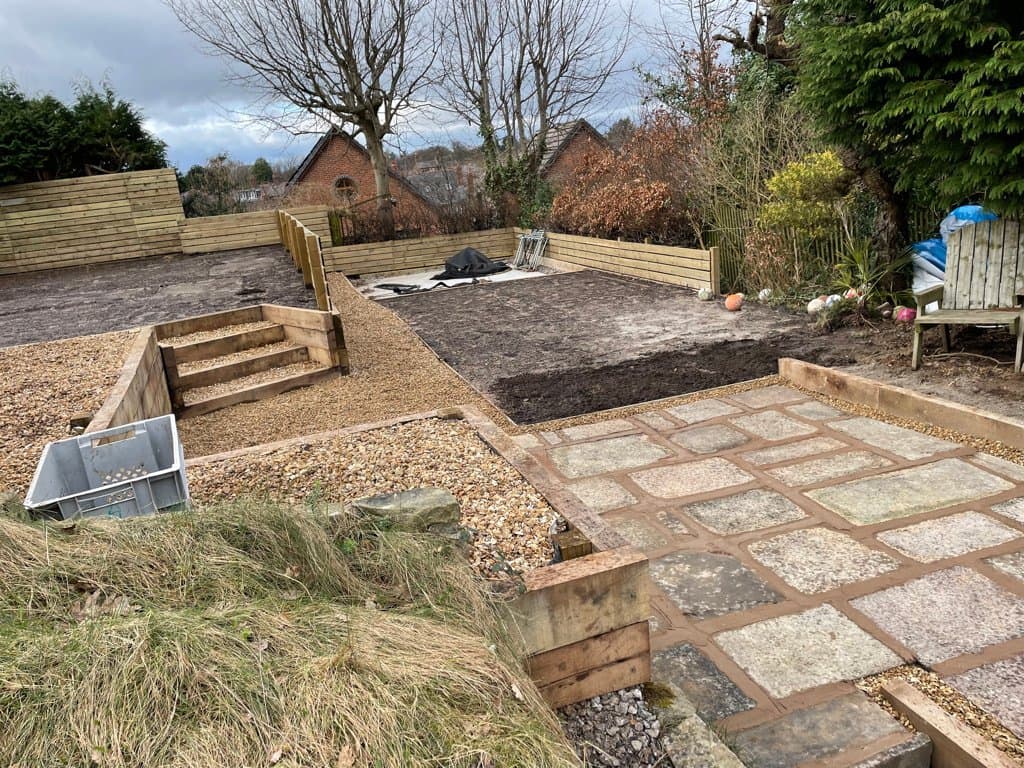
With the site cleared and prepared, the build moved through its usual sequence: sub-base and drainage first, then hard landscaping — a new patio built to take daily use, not just look good on handover day — followed by turf and planting to bring the garden back to life. Each stage was sequenced so later work never undid earlier work, which sounds obvious but is exactly where rushed projects go wrong.
Why “Ordinary” Gardens Are Often the Best Value Transformation
Not every project starts from a disaster, and Crompton Road didn’t. The garden was usable before we arrived — just tired, underwhelming, and not doing anything for the house it belonged to. Transformations like this one are often the best value a homeowner can get from a landscaping budget, because there’s no wasted spend undoing genuinely bad decisions from a previous owner, no hidden structural problem to fix before the visible work can start. Every pound goes toward the finished garden rather than toward correcting someone else’s shortcuts, which is exactly why a straightforward rebuild like this one can look as dramatic in the “after” photos as a project that started from genuine dereliction.
The Result
Crompton Road now has a garden that matches the effort put into the rest of the house — a proper patio for using the space, not just looking at it, a lawn that’s actually enjoyable to walk on, and planting that gives the garden shape through the seasons rather than a single burst of colour in June. It’s a straightforward transformation, but a genuine one: the kind of project that quietly makes a house nicer to live in every single day, not just when guests are round.
Why Sequencing Still Matters on a Simple Rebuild
Even a straightforward transformation like Crompton Road benefits from the same disciplined sequence we use on more complex projects: drainage and sub-base first, hard landscaping second, turf and planting last. It’s tempting on a smaller job to compress that order to save time — laying turf alongside patio work, say, rather than after it — but the same problems that show up on a complicated build show up here too, just on a smaller scale. A lawn edge disturbed by patio deliveries, a border trodden flat by tradesmen moving materials past it. Keeping the sequence disciplined regardless of project size is part of why a “simple” rebuild like this one still holds up years later.
Landscaping in Macclesfield?
Whether your garden needs a full rebuild like this one or just one element sorted — a new patio, a proper lawn, structured borders — we manage the whole process from clearance through to finished planting. See our full garden makeover page for how the process runs, or get in touch if you’re in Macclesfield or the surrounding villages.